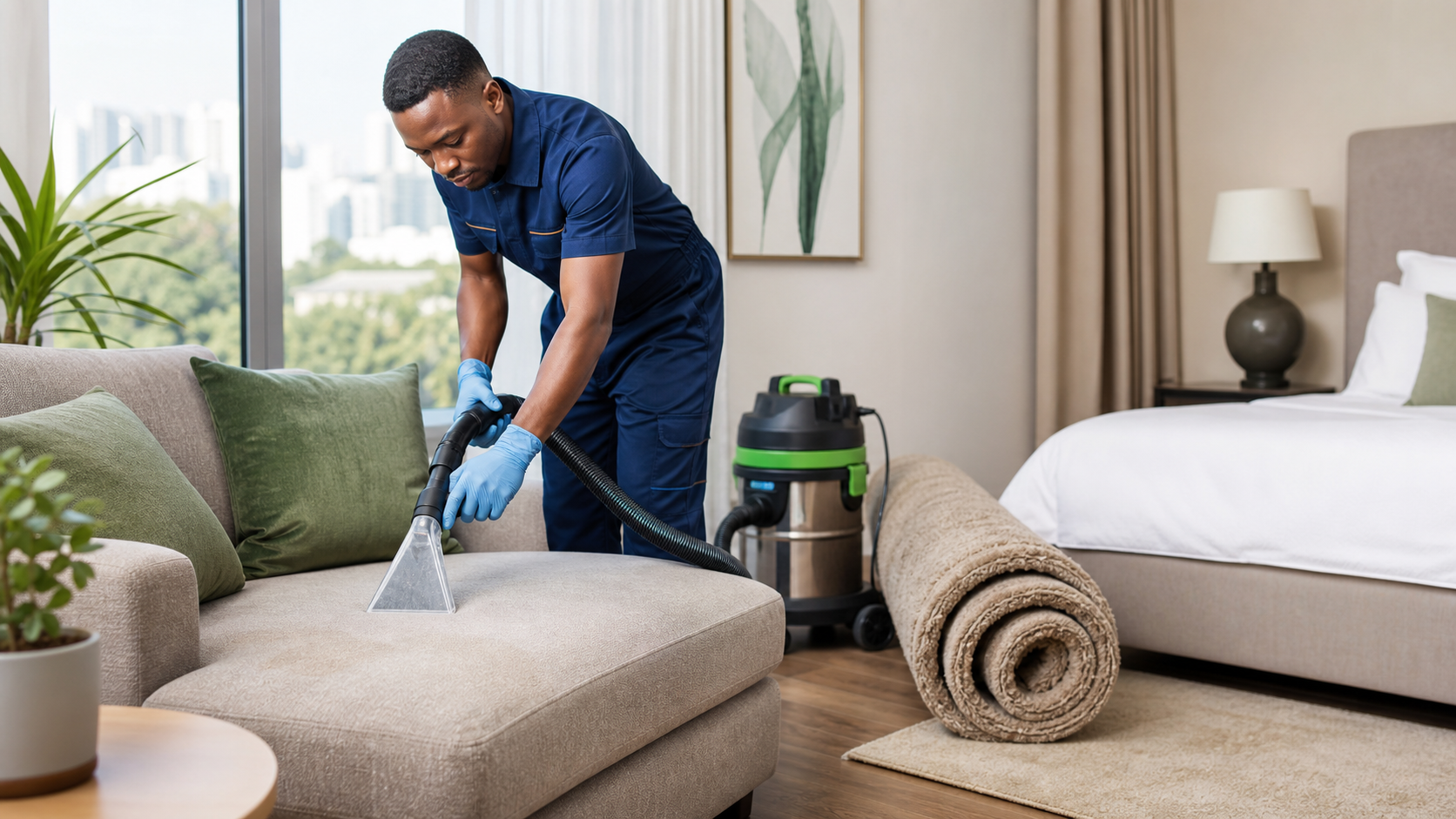
Every home has at least one stain with a story behind it. The wine glass that tipped over during a dinner party. The grease splatter from a Sunday morning pancake session. The mystery mark on the carpet that nobody wants to claim responsibility for. Stains happen — that's just life with people, pets, and food in the same space. The real question is what to do once they've already set in.
This guide walks through how to remove stubborn stains from the surfaces where they show up most: fabric, carpet, upholstery, and hard surfaces like countertops and tile. Some of these tricks use ingredients already sitting in your pantry; others call for a slightly more specialized approach. Either way, the goal is the same — lift the stain without damaging what's underneath it.
Why Some Stains Are So Hard to Remove
Before jumping into specific techniques, it helps to understand what actually makes a stain "stubborn" in the first place.
Stains generally fall into a few categories, and each one responds to different treatment:
- Protein-based stains (blood, sweat, dairy, egg) — these can actually set more firmly if treated with hot water, because heat causes the proteins to bind to fibers.
- Tannin stains (coffee, tea, wine, fruit juice) — these are pigment-rich and tend to spread if not blotted carefully.
- Oil-based stains (grease, makeup, butter) — these repel water-based cleaners, which is why dish soap (designed to cut grease) often works better than plain water.
- Dye-based stains (ink, grass, some cosmetics) — these bond directly to fibers and are notoriously resistant to standard detergents.
Knowing which category a stain falls into changes your whole approach — using the wrong method (like hot water on a blood stain) can actually make things worse instead of better. It's the same logic [professional deep cleaning](#) relies on: matching the right method to the right type of grime, rather than reaching for one product and hoping for the best.
The Golden Rules of Stain Removal
A few universal principles apply no matter what kind of stain you're dealing with:
- Act fast, but don't panic. The sooner you treat a stain, the easier it lifts. But even "old" stains aren't always a lost cause.
- Blot, don't rub. Rubbing pushes the stain deeper into fibers and can spread it outward. Always blot from the outside of the stain toward the center.
- Test in an inconspicuous spot first. Before applying any cleaning solution to a visible area, test it on a hidden patch of the same fabric or surface to check for discoloration or damage.
- Cold water first, almost always. Hot water can set many stains permanently, especially protein-based ones. When in doubt, start cold.
- Patience beats force. Repeating a gentle treatment two or three times is almost always more effective — and safer for the material — than one aggressive scrubbing session.
How to Remove Common Stains by Type
Red Wine
Few stains trigger instant panic like red wine on a light carpet or tablecloth. The good news: it's very treatable if you act quickly.
- Blot up as much liquid as possible with a clean cloth — don't rub.
- Sprinkle salt or baking soda generously over the stain to help absorb the remaining liquid.
- Mix one part dish soap with two parts hydrogen peroxide and apply directly to the stain.
- Let it sit for a few minutes, then blot with a clean, damp cloth.
- Repeat as needed, then rinse with cold water.
Coffee and Tea
Coffee and tea stains are tannin-based, which means they respond well to a mix of mild detergent and cold water.
- Blot excess liquid immediately.
- Mix one tablespoon of dish soap, one tablespoon of white vinegar, and two cups of cold water.
- Apply the solution to the stain with a clean cloth, working from the outside in.
- Rinse with cold water and blot dry.
For carpets specifically, this same solution works well, but always blot rather than scrub to avoid spreading the pigment further into the fibers.
Blood
Blood is a classic protein stain, and the number one mistake people make is reaching for hot water.
- Rinse the area immediately with cold water — never hot.
- Apply a small amount of hydrogen peroxide directly to the stain and watch it bubble as it lifts the blood from the fibers.
- Blot with a clean cloth, repeating as necessary.
- For fabric, a paste of cold water and baking soda left on the stain for 30 minutes before rinsing can help finish the job.
Grease and Oil
Grease stains need something that can break down fat molecules — plain water alone won't cut it.
- Blot up any excess oil first.
- Sprinkle the area generously with cornstarch or baking soda and let it sit for 15–20 minutes to absorb the oil.
- Brush off the powder, then apply a small amount of dish soap (designed specifically to break down grease) directly to the stain.
- Gently work it in with a soft brush, then rinse with warm water.
Grass Stains
Common on kids' clothing and notoriously stubborn, grass stains are a dye-based stain that responds best to enzyme-based treatment.
- Apply a small amount of white vinegar directly to the stain and let it sit for 10 minutes.
- Follow with a dab of liquid laundry detergent, working it gently into the fibers.
- Rinse with cold water and check the stain before drying — heat from a dryer can set any remaining residue permanently.
Ink
Ink stains call for rubbing alcohol, which breaks down the dye without spreading it.
- Place a clean cloth or paper towel underneath the stained area to absorb what comes through.
- Dab rubbing alcohol onto the stain using a cotton ball, working from the outside in.
- Continue until the ink stops transferring to the cloth.
- Rinse with cold water and launder as usual.
Pet Stains and Odors
Pet accidents on carpet or upholstery are a combination of organic stain and odor, which means standard cleaners often only address half the problem.
- Blot up as much liquid as possible.
- Apply an enzyme-based cleaner specifically designed to break down the proteins in pet urine — this is the key difference from a standard stain remover, since it neutralizes odor at the source rather than masking it.
- Let the enzyme cleaner sit according to the product's instructions (usually 10–15 minutes) before blotting dry.
- For older or set-in pet stains, repeat treatments may be necessary, and in some cases, a deeper carpet treatment is the only way to fully resolve both stain and odor.
Stain Removal on Different Surfaces
The techniques above work well for fabric and carpet, but hard surfaces call for slightly different methods.
Countertops
For stains on stone, laminate, or tile countertops:
- Organic stains (coffee, wine, fruit): a paste of baking soda and water, left on the stain for several hours or overnight, often lifts even set-in marks.
- Hard water rings: a mix of equal parts white vinegar and water, applied and left for 10–15 minutes before wiping.
- Stone countertops (granite, marble) need extra caution — acidic cleaners like vinegar or lemon juice can etch the surface, so stick to a pH-neutral stone cleaner or baking soda paste instead.
Tile and Grout
Grout is porous, which is exactly why it holds onto stains so stubbornly.
- Mix baking soda and hydrogen peroxide into a thick paste.
- Apply directly to stained grout lines and let sit for 10–15 minutes.
- Scrub with a stiff-bristled brush (an old toothbrush works well for tight lines).
- Rinse thoroughly with clean water.
For larger areas or grout that hasn't been treated in a long time, this is one of the tasks that often overlaps with a broader [deep cleaning routine](#), since grout buildup tends to accumulate steadily over months rather than appearing overnight.
Upholstery
Always check the manufacturer's cleaning code on furniture tags before treating a stain:
- W — water-based cleaners are safe
- S — solvent-based cleaners only (no water)
- WS — either water- or solvent-based cleaners can be used
- X — vacuum only; no liquid cleaners
Using the wrong type of cleaner on upholstery can cause permanent watermarks or discoloration, so this one step — checking the tag — saves a lot of regret.
Natural vs. Commercial Stain Removers
There's an ongoing debate between pantry-ingredient solutions and store-bought stain removers, and honestly, both have their place.
Natural solutions (baking soda, vinegar, hydrogen peroxide, dish soap) are inexpensive, generally safer for households with kids or pets, and effective on a wide range of fresh stains. They're a great first line of defense.
Commercial stain removers are formulated for specific stain types — enzyme cleaners for organic and pet stains, oxygen-based bleaches for set-in or older stains, and solvent-based removers for oil and grease. For particularly stubborn or older stains, a targeted commercial product often works faster and more reliably than a DIY mix.
A reasonable approach: keep a few natural staples on hand for quick, fresh-stain response, and invest in one or two specialized commercial products (an enzyme cleaner and an oxygen-based stain remover) for the tougher cases.
What to Do With Set-In or Old Stains
Not every stain gets caught in time. If you're dealing with something that's already dried or been through the dryer (heat can permanently set many stains), here's the approach:
- Re-wet the stain with cold water to reactivate it before applying any treatment.
- Apply an oxygen-based stain remover or enzyme cleaner, depending on the stain type, and let it sit for the full recommended time — often longer than for a fresh stain.
- Repeat treatments rather than increasing the strength or scrubbing harder. Multiple gentle applications are almost always more effective than one aggressive attempt.
- Consider professional help for valuable or delicate items — a favorite rug, an upholstered heirloom chair, or carpet that covers a large area. Professional stain treatment often includes equipment and products that go well beyond what's available for home use.
When to Call in Professional Help
Some stains are worth handling yourself, and some are genuinely better left to professionals — particularly when:
- The stain covers a large area of carpet or upholstery
- The item is delicate, valuable, or has a "professional clean only" care label
- Multiple DIY attempts haven't worked and the stain may be more deeply set than it appears
- The stain involves biohazard material (significant blood, bodily fluids), where proper [disinfection](#) matters as much as visual stain removal
Professional cleaners have access to hot water extraction equipment, specialized solvents, and experience identifying stain types that aren't always obvious to the untrained eye — which is often the difference between a stain that fades and one that disappears completely.
Building a Stain-Ready Cleaning Kit
Having the right supplies on hand before a stain happens makes all the difference in how well it comes out. A simple stain-removal kit worth keeping stocked:
- White vinegar
- Baking soda
- Hydrogen peroxide (3%)
- Dish soap
- Enzyme-based cleaner
- Oxygen-based stain remover (powder or spray)
- A few clean white cloths or paper towels (color-safe for blotting)
- A soft-bristled brush and an old toothbrush
Keeping these together in one spot — a small caddy under the sink, for example — means you're not scrambling to find ingredients while a stain is actively setting.
Final Thoughts
Stubborn stains feel overwhelming in the moment, but almost all of them respond to the same basic logic: identify the type of stain, act quickly, use cold water and the right cleaning agent, and blot rather than scrub. The specific ingredients matter less than the method — patience and the correct approach will outperform sheer elbow grease nearly every time.
Keep a basic stain-removal kit on hand, learn the few key techniques for the stains that show up most often in your home, and don't hesitate to call in professional help for anything large, delicate, or particularly stubborn. With the right approach, "stubborn" stains are rarely as permanent as they first appear.
---
Dealing with a stain right now? Identify which category it falls into — protein, tannin, oil, or dye — and start with cold water and a gentle blot before reaching for anything stronger. The right first step makes everything after it easier.
Related Lasafi Guides
Use these internal Lasafi resources to compare related services, plan the right scope, and move from research to booking without leaving the site.
- How to Clean a Mattress
- How to Clean a Sofa
- Best Sofa Cleaning Company
- Carpet Cleaning Services in Nairobi: Remove Tough Stains Right
- Lasafi services
- Book a Lasafi service
Next step with Lasafi
If this service fits your situation, prepare the property location, preferred time, priority areas, and any photos that explain the condition. Then use the booking page so the Lasafi team can review the request clearly.