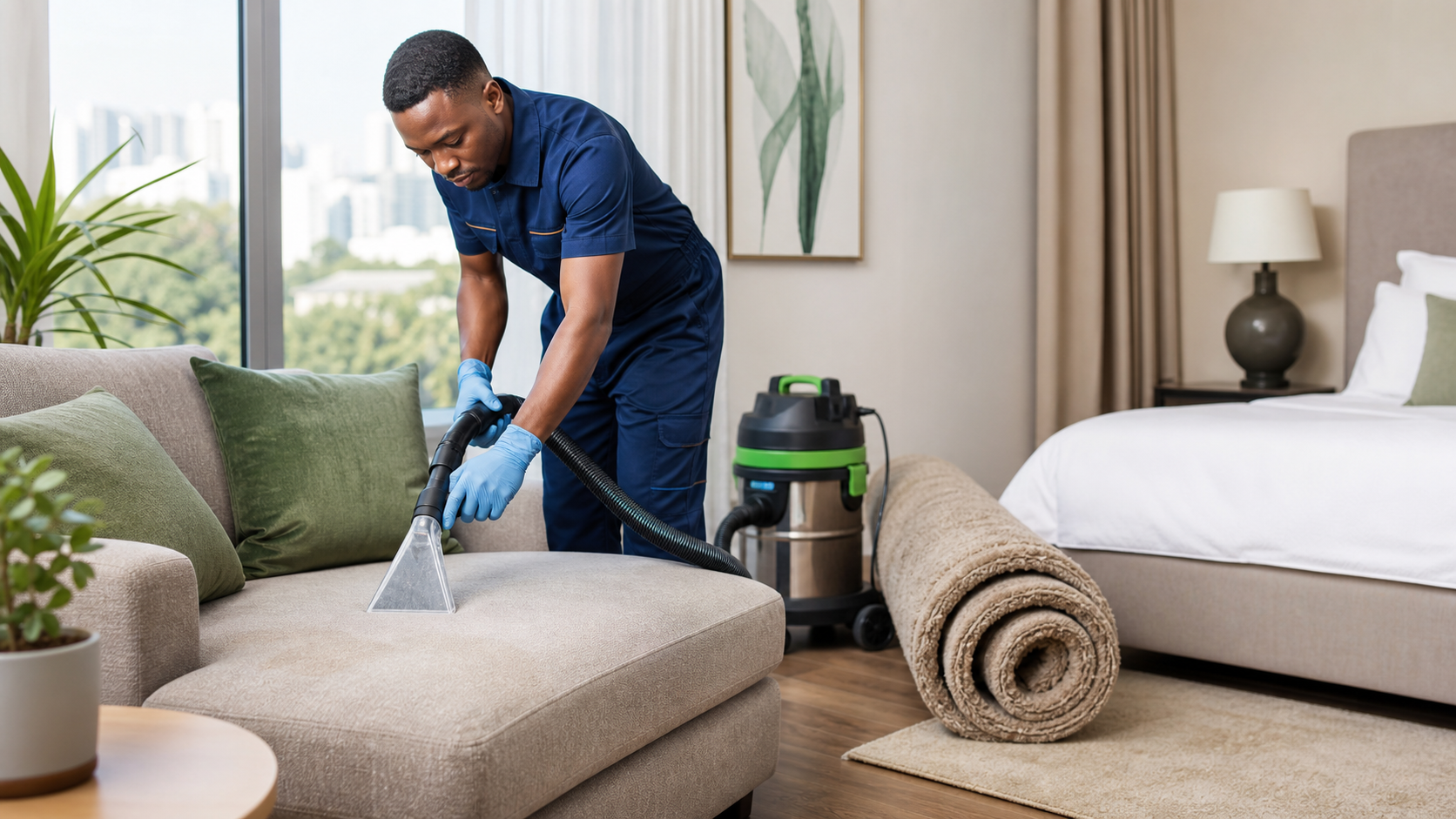
Carpets have a way of absorbing everything that happens on top of them — spilled coffee, muddy footprints tracked in during Nairobi's rainy season, pet accidents, dust kicked up from nearby construction, and the slow, steady buildup of everyday foot traffic. By the time a stain or a dull, matted patch becomes impossible to ignore, vacuuming and home spot-cleaning usually aren't enough to fix it.
That's where professional carpet cleaning comes in. This guide covers everything worth knowing about carpet cleaning services in Nairobi — how professional cleaning actually works, which methods handle which types of stains, what affects pricing, and how to choose a provider that will genuinely restore your carpet rather than just make it look temporarily better.
Why Carpets in Nairobi Need More Than Just Vacuuming
A few factors specific to life in Nairobi mean carpets here tend to accumulate dirt and grime faster than in many other environments.
Dust from unpaved roads and ongoing construction settles into homes and offices constantly, and carpet fibers trap this fine particulate matter far more effectively than hard flooring — which is great for air quality in the short term, but means carpets need more frequent deep attention than they might elsewhere.
The rainy season brings mud and moisture tracked in from outside, which can settle deep into carpet fibers and, if not properly dried and treated, contribute to musty odors or even mold growth in poorly ventilated rooms.
High foot traffic in offices and commercial spaces means carpets in busy Nairobi workplaces see significantly more wear than residential carpets, requiring a more frequent and thorough cleaning schedule to maintain both appearance and hygiene.
Pets and children are common in Nairobi households, and both contribute to the kind of staining and odor buildup that surface vacuuming simply can't resolve on its own.
Given all this, a regular vacuuming routine handles surface dust, but a genuine deep clean — ideally every six to twelve months, similar to the rhythm recommended in most [deep cleaning schedules](#) — is what actually keeps a carpet both looking good and staying hygienic over the long term.
What Professional Carpet Cleaning Actually Involves
Professional carpet cleaning goes well beyond what a household vacuum or a rented spot-cleaner can achieve. Here's what a thorough service typically includes.
1. Pre-Inspection
A technician examines the carpet to identify the fiber type, the extent of staining, and any particular problem areas that need targeted pre-treatment before the broader cleaning begins. This step matters because different carpet materials — wool, nylon, polyester, or blended synthetic fibers — respond differently to cleaning chemicals and heat.
2. Pre-Vacuuming
Before any liquid or cleaning solution touches the carpet, a thorough vacuum pass removes loose dirt, dust, and debris. Skipping this step and going straight to wet cleaning just turns surface dirt into mud, working against the cleaning process rather than helping it.
3. Stain Pre-Treatment
Visible stains are treated individually before the full carpet cleaning begins, with the technician matching the treatment to the stain type — protein-based stains like blood or sweat respond differently than tannin-based stains like coffee or wine, similar to the [stain-by-type approach](#) recommended for fabric stains throughout the home.
4. Deep Cleaning Treatment
This is where the bulk of the actual cleaning happens, typically using one of a few professional methods (covered in detail below), each suited to different carpet types and levels of soiling.
5. Extraction and Rinsing
For wet cleaning methods, a thorough extraction pass removes both the cleaning solution and the loosened dirt it's lifted from deep within the fibers, leaving minimal residue behind.
6. Drying
Proper drying time is essential — carpets that stay damp too long are at risk of developing mold or a musty odor within the padding underneath. Professional services use equipment and airflow techniques that significantly speed up drying compared to a DIY rental machine.
Common Professional Carpet Cleaning Methods
Hot Water Extraction (Steam Cleaning)
This is the most widely used and generally most effective method for deep carpet cleaning. Hot water mixed with a cleaning solution is injected deep into the carpet fibers under pressure, then immediately extracted along with the loosened dirt and grime. It's particularly effective for carpets with heavy soiling, deep-set stains, or allergen buildup, since the combination of heat and extraction reaches well below the surface.
Dry Carpet Cleaning
This method uses minimal moisture, relying instead on a dry compound or low-moisture foam that's worked into the carpet and then vacuumed away along with the dirt it's absorbed. It's a good option for carpets that need to be back in use quickly, since drying time is significantly shorter than with hot water extraction.
Bonnet Cleaning
Often used for lighter maintenance cleaning rather than deep restoration, bonnet cleaning uses a rotating pad soaked in cleaning solution to lift surface-level dirt. It's faster and requires less drying time, but doesn't reach as deep into the fibers as extraction methods — making it more suitable for routine maintenance between full deep cleans.
Encapsulation Cleaning
This method uses a cleaning solution that crystallizes around dirt particles as it dries, allowing them to be vacuumed away once fully dried. It's a popular choice for commercial carpets that need frequent maintenance with minimal downtime, since drying time is typically faster than hot water extraction.
How Professionals Tackle Tough, Set-In Stains
Stubborn carpet stains require more than a generic all-purpose cleaner. Professional technicians typically follow a stain-specific approach:
Coffee and tea stains respond well to a combination of mild detergent and controlled heat, applied carefully to avoid spreading the tannin-based pigment further into the fibers.
Red wine stains require prompt blotting and a targeted oxidizing treatment, since the pigment in wine can set permanently if treated with the wrong approach or left too long.
Pet stains and odors need an enzyme-based treatment that breaks down the organic compounds at the source, rather than simply masking the smell — a step that's just as important as the stain removal itself, particularly for households with pets.
Ink stains call for a solvent-based approach, since standard water-based cleaners typically aren't strong enough to break down dye-based pigments.
Grease and oil stains require a degreasing pre-treatment before the main cleaning process, since oil-based stains repel water-based cleaning solutions if treated without the right preparation first.
For long-set-in or unknown stains, professional technicians often test a small, inconspicuous area first to determine the most effective treatment without risking damage to the carpet fibers — the same cautious approach recommended for [DIY stain removal](#) on any surface throughout the home.
How Often Should Carpets Be Professionally Cleaned?
A general guideline for most Nairobi homes and offices:
- Residential carpets in low-traffic areas: every 12 months
- Residential carpets in high-traffic areas or homes with pets/children: every 6 months
- Commercial and office carpets: every 3–6 months, depending on foot traffic
- After a major spill, illness, or visible staining: as soon as reasonably possible, rather than waiting for the next scheduled clean
Between professional cleanings, regular vacuuming — at least once or twice a week in high-traffic areas — significantly extends the time between deep cleans needed to keep a carpet looking and smelling fresh.
How Pricing Typically Works in Nairobi
Carpet cleaning pricing in Nairobi generally depends on a handful of factors:
- Size of the area — measured either by room or by square footage, larger carpeted areas naturally cost more to clean thoroughly
- Carpet condition — carpets with heavy staining, deep-set dirt, or odor issues may require additional treatment time and cost more than a routine maintenance clean
- Carpet type and fiber — delicate or specialty fibers like wool sometimes require more careful, time-consuming methods
- Method used — hot water extraction often takes longer (due to drying time) than dry or encapsulation methods, which can factor into pricing
- Add-on treatments — stain protection coatings or deodorizing treatments are typically priced separately from the base cleaning
Getting a couple of quotes for comparison is reasonable, especially for larger commercial spaces or carpets with significant staining, but the lowest price isn't always the best value if it means a rushed job or the wrong method for your specific carpet type.
What to Look for in a Carpet Cleaning Provider
Proper Equipment
Commercial-grade extraction equipment makes a measurable difference compared to rental machines or basic spray-and-blot methods — both in how deep the cleaning reaches and how quickly the carpet dries afterward.
Fiber-Specific Knowledge
The best providers identify your carpet's fiber type before treatment and adjust their method accordingly, rather than applying the same approach to every carpet regardless of material.
Transparent Process and Pricing
A reputable company should be able to clearly explain which method they'll use, how long drying will take, and what the full cost will be before starting the job — without surprise charges appearing afterward.
Realistic Expectations About Stain Removal
Not every stain can be fully removed, particularly old or deeply set ones. A trustworthy provider will be upfront about what's realistically achievable rather than overpromising results just to win the booking.
Experience With Both Residential and Commercial Carpets
If you're cleaning an office carpet specifically, look for a provider experienced with commercial-grade carpets and the higher foot traffic they typically endure, as the approach can differ from residential carpet cleaning.
Questions to Ask Before Booking
A short conversation before booking can help you avoid disappointment later. Worth asking any carpet cleaning provider:
What method will you use for my specific carpet type? A good technician should be able to explain their reasoning, not just default to one method regardless of fiber type.
How long will the carpet need to dry before it can be walked on again? Drying time varies significantly by method, and you'll want to plan around it, especially for high-traffic rooms or offices.
Do you offer stain protection treatment as an add-on? This can help extend the time between deep cleans by making future stains easier to treat before they set.
What's your approach to set-in or older stains? Realistic expectations here help avoid disappointment if a stain has been present for a long time and can't be fully reversed.
Is your equipment commercial-grade, or are you using a basic rental-style machine? This affects both the depth of cleaning and how quickly the carpet dries afterward.
DIY Maintenance Between Professional Cleanings
Professional cleaning delivers the deepest results, but a few habits help maintain that freshness between scheduled visits:
- Vacuum regularly — at least weekly in most homes, more often in high-traffic areas or homes with pets
- Treat spills immediately using a gentle blotting technique rather than rubbing, which can push the stain deeper into the fibers
- Use doormats at entry points, particularly useful during Nairobi's rainy season when mud and moisture are more likely to be tracked indoors
- Avoid walking on damp carpet after a spot-clean, since this can grind dirt deeper before the area has fully dried
- Rotate furniture occasionally to even out wear patterns and prevent permanent indentations in high-traffic carpeted areas
Signs Your Carpet Is Overdue for Professional Cleaning
A few clear signals indicate it's time to book a deep clean rather than waiting:
- A musty or stale odor that doesn't improve with regular vacuuming or airing out the room
- Visible staining that hasn't responded to home spot-cleaning attempts
- Increased allergy symptoms noticeable specifically in carpeted rooms
- Carpet fibers appearing matted, dull, or flattened despite regular vacuuming
- It's been over a year since the carpet's last professional deep clean
None of these are urgent emergencies on their own, but together they're a reliable sign that a professional visit is overdue rather than optional.
Commercial Carpet Care for Nairobi Offices
Office carpets face a different set of challenges than residential ones — significantly higher foot traffic, more frequent spills near shared kitchens or breakrooms, and the added pressure of needing to look presentable for clients and visitors at all times.
For Nairobi businesses, a regular commercial carpet care schedule — typically every three to six months depending on traffic levels — helps maintain both appearance and indoor air quality, which connects directly to the broader case for [professional office cleaning](#) as a worthwhile business investment rather than a discretionary expense.
Scheduling commercial carpet cleaning outside of business hours, where possible, also helps minimize disruption to daily operations while still keeping the office looking its best.
Final Thoughts
Carpets absorb far more than what's visible on the surface, and in a city like Nairobi — with its dust, seasonal mud, and busy households and offices — regular professional carpet cleaning isn't a luxury so much as routine maintenance for a surface that works harder than most people realize. The right method, matched to your specific carpet type and stain situation, makes the difference between a temporary surface refresh and a genuinely deep, lasting clean.
Whether you're dealing with a stubborn wine stain in the living room, pet odor that's been building for months, or a high-traffic office carpet that's overdue for attention, professional carpet cleaning brings equipment and expertise that home methods simply can't match. Pair that periodic deep clean with consistent vacuuming and prompt spill response between visits, and your carpets will stay looking — and genuinely being — clean for far longer.
---
Noticing stains, odors, or dullness in your carpet that vacuuming just isn't fixing anymore? It's likely time for a professional deep clean — the sooner stubborn stains are treated, the better the chances of restoring your carpet to its original condition.
Related Lasafi Guides
Use these internal Lasafi resources to compare related services, plan the right scope, and move from research to booking without leaving the site.
- How to Remove Stubborn Stains
- How to Clean a Mattress
- How to Clean a Sofa
- Best Sofa Cleaning Company
- Lasafi services
- Book a Lasafi service
Next step with Lasafi
If this service fits your situation, prepare the property location, preferred time, priority areas, and any photos that explain the condition. Then use the booking page so the Lasafi team can review the request clearly.